Flat Clearance Penge Health & Safety Policy
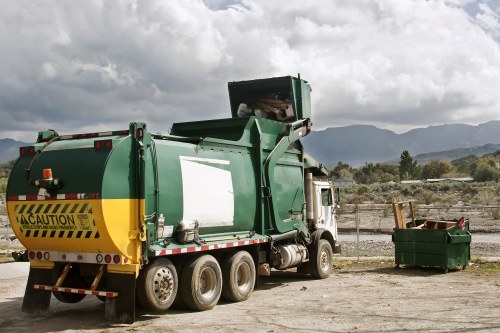
This Health & Safety Policy sets out the commitment of Flat Clearance Penge to deliver safe, compliant and reliable flat clearance and rubbish removal services across our service area. The policy applies to all staff, contractors and subcontractors engaged in flat clearance, waste clearance and rubbish collection activities, and aims to protect employees, clients, visitors and the wider public. We aim to operate as a responsible rubbish company and waste clearance provider by embedding safety into every stage of our operations, from initial assessment to final disposal. The purpose of this document is to define responsibilities, describe control measures and establish a culture of continuous improvement to minimise harm and environmental impact.Our objectives include maintaining a consistently high standard of operational safety, reducing workplace incidents, and ensuring that every project is delivered with respect for people and property. This policy covers: risk assessment prior to works, safe handling of household and commercial waste, secure removal and transport of items, and appropriate segregation of recyclable materials. It also explains our commitment to providing appropriate training, personal protective equipment (PPE) and safe systems of work for those involved in flat clearances and related rubbish removal tasks.
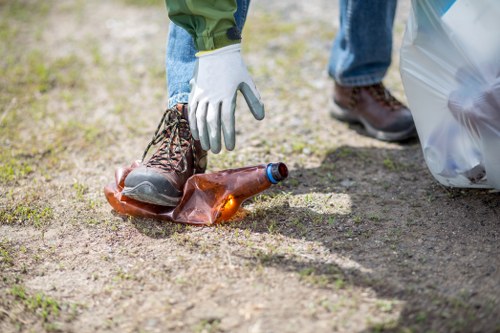 The scope of the policy embraces a wide range of services: Penge flat clearance, single-room clearances, full-property emptying, and ad hoc rubbish collection for domestic and small commercial clients. Management will ensure resources are available to plan, supervise and execute assignments safely and efficiently. All operatives must follow safe work procedures, report hazards promptly, and cooperate with supervisors during routine inspections and incident investigations. The policy emphasises that safety is a shared responsibility and that every employee has the right and duty to stop any work they reasonably believe to be unsafe.
Risk Assessment and Control Measures
A systematic approach to risk assessment is central to our safety management. Before any clearance begins a documented risk assessment will be completed to identify hazards such as manual handling loads, hazardous waste (sharp objects, chemicals, contaminated materials), trip and fall risks, and vehicle movement. Identified risks will be reduced by adopting control measures that are proportionate and effective, including mechanical aids, improved housekeeping and clear exclusion zones around working areas. All assessments are reviewed when conditions change or when new information is available.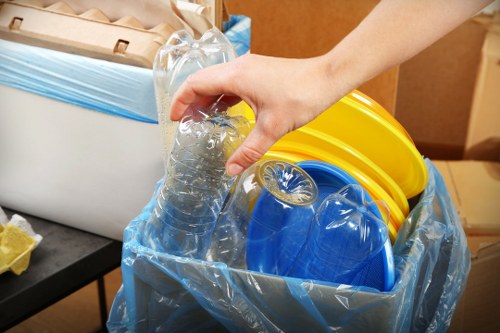 Operatives are required to use suitable PPE for the task, which may include gloves, high-visibility clothing, safety footwear and respiratory protection where dust or odour is present. Equipment and vehicles used for rubbish removal are subject to regular maintenance schedules and pre-use checks to ensure they operate safely. Loading and unloading practices are standardised to prevent overloading and to ensure safe stacking inside vehicles and containers. We promote the segregation of recyclables and non-hazardous waste at source to limit contamination and reduce manual sorting where possible.
Key control responsibilities include:
- Management: provide resources, training and oversight to maintain safe flat clearance operations and to ensure compliance with policy requirements.
- Supervisors: implement safe systems of work, carry out site briefings, ensure risk assessments are current and supervise complex or high-risk clearances.
- Operatives: follow procedures, wear PPE, report unsafe conditions and participate in training and refresher programmes.
Training, Competence and Communication
Our workforce must be competent for the tasks they undertake. We provide structured induction training for new employees, task-specific instruction for operatives performing clearances, and periodic refresher training to embed good practice. Training covers manual handling techniques, safe use of equipment, identification of hazardous materials and what to do on discovery of unknown substances. Communication of safety information is achieved through toolbox talks, written procedures and on-site briefings prior to each job. Emergency response procedures are clearly defined and communicated. In the event of an incident, operatives must prioritise personal safety and the safety of others, give first aid where trained to do so, and notify supervisors to activate the incident management protocol. Fire safety, spill control and safe handling of sharps or contaminated items are included within emergency arrangements. Incidents and near-misses are recorded, investigated and used to inform corrective actions that prevent recurrence.
 Monitoring, audit and continual improvement form an integral part of our Health & Safety Policy. Regular inspections of work practices, vehicle checks and audit of training records ensure standards are maintained. Where non-conformances are identified, prompt corrective actions are taken and lessons learned are shared across the team. Policy performance is reviewed periodically to reflect operational changes, technological advances or improved guidance, ensuring our rubbish removal and flat clearance services meet accepted safety expectations.
We commit to maintaining clear lines of responsibility, ensuring that health and safety considerations are integrated into planning and delivery. Contractors and sub-contractors engaged to support our clearances must meet our safety requirements and will be assessed before appointment; they must also adhere to the same standards while working on our projects. The policy supports an open reporting culture where hazards, suggestions and concerns are raised and addressed without fear of reprisal.
Operational controls include vehicle risk management, secure loading arrangements, safe access to properties, and appropriate signage around work zones. Manual handling tasks are assessed and, where practicable, mechanical aids or team lift techniques are used to reduce strain. Special attention is paid to identifying and isolating potential biohazards and chemical residues; where unknown materials are encountered, work will be paused until safe handling measures are identified and implemented.
This Health & Safety Policy for Flat Clearance Penge is a living document that supports our ambition to operate as a conscientious rubbish company and waste clearance provider. It is communicated to all staff and is available to stakeholders involved in delivering or supervising clearance activities. Through consistent application of these principles and commitments we aim to protect people, property and the environment while delivering reliable, efficient flat clearance and rubbish removal services across our service area.