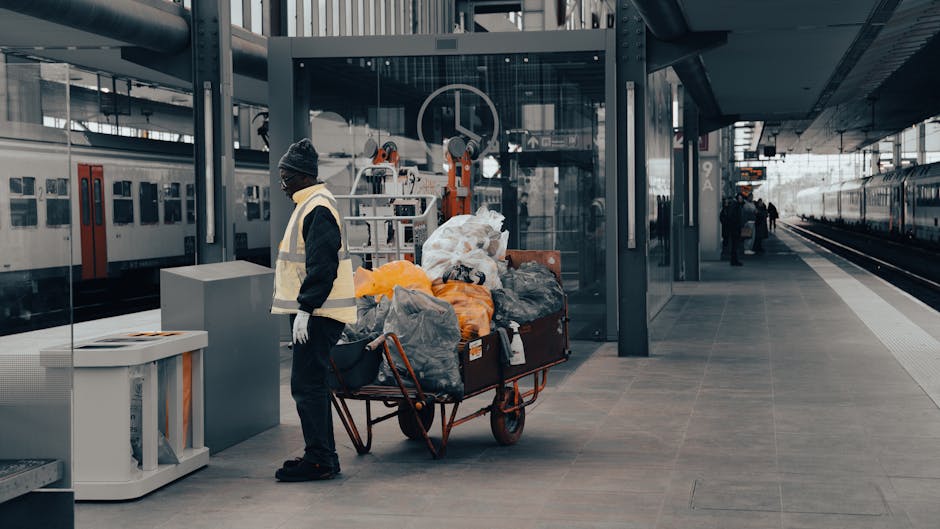
Penge East Station Rubbish Clearance Guide for Commuters
If you commute through Penge East, you'll know how quickly rubbish can become a nuisance. One forgotten bag, a broken umbrella, a takeaway box that's gone a bit stale by 8 a.m. - and suddenly your morning feels cluttered before you've even reached the platform. This Penge East station rubbish clearance guide for commuters is here to make that part of the day simpler, cleaner, and far less stressful.
Whether you're clearing a flat near the station, tidying after a move, or dealing with bulky items that won't fit in a normal bin, the best approach is usually the one that's quick, responsible, and doesn't get in the way of your commute. Below, you'll find a practical breakdown of what to do, what to avoid, and how to choose a rubbish clearance method that actually suits a busy London routine.
- Why it matters
- How it works
- Key benefits and practical advantages
- Who this is for and when it makes sense
- Step-by-step guidance
- Expert tips
- Common mistakes to avoid
- Tools, resources and recommendations
- Law, compliance and best practice
- Options and comparison table
- Case study
- Practical checklist
- Conclusion
- Frequently asked questions
Why Penge East station rubbish clearance guide for commuters Matters
Commuter life is built on timing. Trains, connections, school runs, work starts, and all the little things that happen in between. So when rubbish starts building up around your home, office, rental flat, or storage space near Penge East station, it can create more than just a visual mess. It can slow you down.
In practical terms, rubbish clearance matters because it helps you stay on top of space, hygiene, and safety. That matters even more in smaller homes and flats, where a couple of bags, a mattress, or a broken chair can suddenly block a hallway or sit beside the front door for days. And let's be honest, nobody wants to drag a bulky item through the street at 7:45 on a Monday. Not if they can help it.
There's also the neighbour factor. Shared entrances, tight pavements, and busy station-side streets mean that leftover waste can become everyone's problem if it's left too long. Good clearance is not just about getting rid of things; it's about doing it at the right time, in the right way, with minimal disruption.
Expert summary: For commuters, the best rubbish clearance solution is usually the one that fits around your train times, handles bulky or awkward items safely, and keeps your property clear without adding another errand to the week.
How Penge East station rubbish clearance guide for commuters Works
The basic process is straightforward, but the detail makes all the difference. You identify what needs to go, sort it by type, decide whether it's general waste, furniture, appliance waste, or something more specialised, then choose the most suitable clearance method.
For commuters, speed and reliability are usually the deciding factors. Some people only need a few black bags removed. Others need a full flat emptied after moving out. Sometimes it's a mixture: a dismantled desk, an old fridge, a couple of chairs, and some mixed household waste that has gathered over months because, well, life got busy.
A proper clearance service should also think about sorting and recycling where possible. That is why many people look beyond simple disposal and prefer a service that can separate reusable or recyclable materials from general waste. If you are planning a larger clearance, it may help to look at waste removal alongside more specific services like furniture disposal or fridge and appliance removal.
In day-to-day use, the process often looks like this:
- Make a short list of everything you want removed.
- Separate loose rubbish from bulky items.
- Flag anything sharp, heavy, electrical, or potentially hazardous.
- Check whether access is via stairs, a lift, a side gate, or a tight front path.
- Book a collection time that won't clash with your commute or neighbours.
- Keep items in one place so the clearance is quicker and safer.
That may sound obvious, but in real life the preparation step is where most time is saved. A neat pile by the door is one thing. A scatter of half-filled bags across the kitchen is another. You can probably picture the difference.
Key Benefits and Practical Advantages
There's a reason commuters tend to value rubbish clearance that is organised and responsive. It solves a lot of small problems at once.
- Less stress before work: You don't start the day stepping around old packaging or apologising to yourself for the mess.
- Safer walking routes: Hallways, stairwells, and front paths stay clear, which matters in compact flats and shared buildings.
- Better use of space: Empty floorspace is a quiet luxury. You notice it immediately once the clutter goes.
- More convenient than self-haul trips: No queueing at a tip, no lifting a damp mattress onto a car roof in the rain. Honestly, who needs that?
- More responsible disposal: Professional clearance can support sorting, recycling, and lawful handling of waste streams.
- Useful for renters and landlords: End-of-tenancy clearances can help reset a property quickly.
There is also a less obvious benefit: mental breathing room. A clear room often feels calmer the moment the last bag is gone. That's not a marketing line, just how most people feel after a long overdue tidy-up.
If you want a broader service that can cover mixed household items, take a look at home clearance or house clearance, depending on the size of the job.
Who This Is For and When It Makes Sense
This guide is especially useful if you are one of the following:
- a commuter living in a flat near Penge East station
- a landlord turning over a rental property
- a tenant moving out on a tight schedule
- a homeowner clearing accumulated waste before the weekend
- a local business dealing with office clutter or packaging waste
- someone with bulky items that won't fit in ordinary refuse collections
It also makes sense if you are dealing with a one-off event. Maybe there's been a small refurb, a bedroom refresh, or a loft clear-out that has been sitting on your to-do list for ages. Truth be told, these jobs rarely get easier by waiting.
For larger properties or more complex rooms, related services such as loft clearance, garage clearance, and office clearance can be a better fit than trying to tackle everything in one tired Saturday afternoon.
Step-by-Step Guidance
Here's the most practical way to handle rubbish clearance near Penge East without overcomplicating it.
1. Sort waste by category
Start with a simple split: general rubbish, recyclables, bulky furniture, electrical items, and anything that could be classed as hazardous. That last one matters. Paint tins, chemicals, and similar items should not be treated like normal household rubbish.
2. Remove obvious reusables
If something can be donated, reused, or passed on, take it out of the clearance pile first. Even a small amount of reuse reduces waste and can make the job cheaper and quicker.
3. Check access
Think like the team arriving on site. Are there narrow stairs? A basement entrance? Limited parking? Is there a lift, and if so, is it large enough for a wardrobe or appliance? These little details can change the plan quite a bit.
4. Measure bulky items
Large items are often the ones that trip people up. A sofa might look manageable in the room, but the hallway corner says otherwise. Measuring helps avoid awkward surprises on collection day.
5. Choose the right type of clearance
A few mixed bags may only need basic waste removal. Bigger household jobs may be more suited to flat clearance or a specialist service like mattress and sofa disposal.
6. Book around your commute
This is where commuters win. A collection timed for a lunch break, early morning, or end of day can remove a lot of friction. The best job is the one that doesn't become another commute itself.
7. Keep a final walkthrough in mind
Before the team leaves, check cupboards, behind doors, under sinks, and in storage corners. People forget things in the oddest places. A box in the hallway. A cable behind the washing machine. Little bits, but they matter.
Expert Tips for Better Results
Over time, you notice patterns. The people who have the smoothest clearances usually do a few small things well.
- Book a little earlier than you think you need to: Especially if you are clearing around a move date or a landlord deadline.
- Keep hazardous and non-hazardous items apart: Don't mix them to save time. It can slow everything down later.
- Take photos before the job: Useful for your own records and for quoting a larger clearance accurately.
- Clear a route to the items: It sounds minor, but saving ten minutes of lifting around corners makes a big difference.
- Be realistic about volume: One small bag and one small bag and one more... suddenly becomes a larger job than expected. That happens a lot.
If your clearance includes a broken appliance or a heavy fridge, specialist handling matters. The same goes for office waste or business clutter where secure and tidy removal is important. In those cases, it may be worth exploring business waste removal or confidential shredding if paperwork is part of the pile.
And a small one: don't leave it all for the night before. That's how a tidy plan becomes a cardboard avalanche.
Common Mistakes to Avoid
Most clearance problems come from rushing, guessing, or assuming the job is smaller than it really is. Happens all the time.
- Leaving everything in mixed piles: This makes sorting slower and can create avoidable handling issues.
- Forgetting about access: A back gate can be handy, but only if it actually opens fully and stays clear.
- Ignoring restricted waste: Hazardous items need more care than a standard household clear-out.
- Underestimating the amount of rubbish: Bags, broken furniture, and packaging add up fast.
- Blocking shared areas: In flats near the station, that is more than just rude. It can create safety and neighbour issues.
- Choosing the wrong service type: A sofa collection is not the same as clearing a whole flat.
Another common one is forgetting to check what should be recycled separately. If you want to be more deliberate about disposal, the page on recycling and sustainability is a sensible place to start.
Be fair to yourself, though. Most of these mistakes are simple to fix once you know what to look for.
Tools, Resources and Recommendations
You do not need a van-load of equipment to organise a good clearance, but a few simple tools help enormously.
- Marker pen and tape: Great for labelling bags or boxes by category.
- Gloves: Useful for handling dusty, sharp, or awkward items.
- Measuring tape: Handy for bulky furniture and appliances.
- Rubbish sacks and boxes: Keep smaller items contained so they don't spread.
- Phone camera: Helps document the job and avoid missed items.
For readers comparing service scope, the company's pages on furniture clearance, fridge and appliance removal, and builders waste clearance are useful if your rubbish pile leans toward one category rather than a general household mix.
For pricing questions, the most sensible next step is to review pricing and quotes. If you prefer to arrange a slot quickly, book online can save a few back-and-forth messages.
Law, Compliance and Best Practice
For rubbish clearance in the UK, the main thing is to use a responsible, lawful approach. You do not need to memorise legislation to do that, but you should understand a few basics.
First, waste should not be fly-tipped or left where it can block pavements, entrances, or shared access routes. Second, hazardous waste should be handled carefully and separated from ordinary rubbish. Third, anyone collecting waste should be able to explain how they manage disposal responsibly.
In practice, this means checking that the process supports safe handling, appropriate loading, and sensible sorting. If you are choosing a provider, it is reasonable to look for clear operational standards and a visible commitment to safety. Pages such as health and safety policy and insurance and safety can help set expectations.
For certain items, best practice is straightforward: electrical appliances should not be dumped casually, sharp objects should be secured, and anything potentially dangerous should be identified before collection. If you are unsure whether something belongs in a normal clearance, a specialist route is usually safer than guessing.
One more thing. If you are handling personal paperwork during a clear-out, secure destruction is worth considering. That is where confidential shredding becomes useful, especially for home offices and small businesses.
Options, Methods, or Comparison Table
Different jobs call for different approaches. There isn't a single perfect method, which is mildly annoying, but also useful once you know what suits your situation.
| Method | Best for | Pros | Watch out for |
|---|---|---|---|
| Self-removal | A few small bags or light items | Flexible, sometimes cheaper on paper | Time-consuming, heavy lifting, transport hassle |
| Skip-based clearance | Longer projects or ongoing waste generation | Handy for repeated disposal | Space requirements, permit considerations, loading limits |
| Man and van waste removal | Mixed rubbish, bulky items, quick turnarounds | Convenient, faster, less strain on you | Needs good access and clear item details |
| Specialist item disposal | Mattresses, sofas, appliances, awkward waste | Better handling for specific item types | May need separate booking if items vary a lot |
For many commuters near Penge East, the middle option is the sweet spot. It saves time without creating a half-day logistics project. If you have a stronger mix of bulky household items, take a look at mattress and sofa disposal or flat clearance for a more complete solution.
Case Study or Real-World Example
Picture a typical weekday near Penge East: a tenant is moving out on Friday, the new place is across town, and the old flat still has a sagging armchair, a broken bedside table, two bagged loads of mixed rubbish, and a fridge that has seen better days. The commuter has a standard 8:30 start and no appetite for dragging everything to a distant recycling point before work.
Instead of trying to break the job into five stressful trips, they sort the items into categories on Wednesday evening. Furniture is kept separate from general waste. The fridge is identified early. Paperwork is shredded, and anything reusable is set aside. On Thursday, the clearance is booked for a time that avoids the school-run rush and fits around the morning train.
The result is not dramatic. That's the point. By Friday morning, the flat is clear, the hallway is usable, and the move feels manageable instead of chaotic. The whole thing takes less emotional energy than if they had tried to improvise it after a long commute. Small win, but a real one.
That kind of clean-up is exactly where house clearance or home clearance can make sense, depending on how much needs to go. For businesses around the station, a similar approach works for desks, packaging, and old equipment through office clearance.
Practical Checklist
Use this simple checklist before collection day.
- Identify every item that needs removing.
- Separate general rubbish, furniture, electricals, and hazardous waste.
- Set aside anything reusable or recyclable.
- Measure bulky items and check access routes.
- Make sure stairs, lifts, and entrances are clear.
- Keep the rubbish in one easy-to-reach place.
- Remove personal paperwork or valuables.
- Confirm the collection time fits your commute.
- Double-check special items like fridges, mattresses, or sofas.
- Do a final sweep before the team arrives.
If you are dealing with a larger or more awkward set of items, you may also want to check the company's guidance on what can go in a skip, even if you are not actually hiring a skip. It helps you think through what belongs where.
Get a free quote today and see how much you can save.
Conclusion
A good rubbish clearance plan near Penge East is not really about waste at all. It's about making your weekly routine lighter, keeping your home or work space usable, and not letting clutter steal time from the things that matter more. For commuters, that matters a lot.
The smartest approach is usually the one that is simple, safe, and realistic: sort items early, choose the right service, keep access clear, and book at a time that works with your day rather than against it. Once you've done it properly once, you'll wonder why you put it off.
And when the last bag goes, the room feels quieter. A bit fresher too. That's a good feeling, really.
Frequently Asked Questions
What is the best rubbish clearance option for commuters near Penge East station?
For most commuters, the best option is one that is quick, flexible, and able to handle mixed waste without requiring you to make several trips. If you have bulky items, a full clearance service is usually more practical than self-removal.
Can I get furniture removed as part of a rubbish clearance?
Yes, in many cases furniture can be removed alongside general rubbish. Large items like sofas, beds, and wardrobes are often handled separately or as part of a broader furniture clearance.
How do I know if I need a full flat clearance or just waste removal?
If you are dealing with a few bags and a couple of loose items, waste removal may be enough. If multiple rooms, bulky furniture, and mixed contents are involved, flat clearance is usually the better fit.
What should I do with an old fridge or freezer?
Appliances should be treated carefully and removed through an appropriate appliance disposal service. They should not be left with ordinary household rubbish, especially if they still contain food residues or coolant-related components.
Is mattress disposal included in rubbish clearance?
It can be, but mattresses are often easier to handle through a dedicated mattress and sofa disposal service. That keeps the job simpler and helps ensure the item is treated properly.
Do I need to sort my rubbish before booking?
It helps a lot, yes. Sorting by waste type makes the collection quicker and can improve recycling outcomes. Even a basic split between general rubbish, furniture, and special items makes a difference.
What happens if I have hazardous waste?
Hazardous items should be identified early and kept separate. Things like chemicals, certain paints, and similar materials need special care and should never be mixed with normal waste without checking the correct handling route.
How much access does the clearance team need?
Enough to move items safely and efficiently. Clear entrances, workable stair access, and a usable route from the property to the collection point all help. If access is tight, mention it in advance.
Can rubbish clearance be arranged around my commute?
Yes, and that is one of the main benefits for station commuters. Many people choose collection times that fit before work, during a break, or after the evening train. It saves a lot of hassle.
What if I have confidential paperwork mixed in with the rubbish?
Separate it and use confidential shredding rather than putting it straight into general waste. That is especially important for home offices, landlords, and small businesses with old records.
Is there a difference between business waste removal and home rubbish clearance?
Yes. Business waste often includes different materials, more regular volumes, and occasionally confidential or compliance-sensitive items. For workplace jobs, business waste removal or office clearance is usually more suitable.
Should I choose a skip or a collection service?
It depends on how much waste you have and how much access space you can spare. A skip can be useful for ongoing work, but for many commuters a collection service is easier because it removes the need to load and manage the waste yourself.
Where can I find more information before booking?
It is sensible to review pricing, service details, and safety information before arranging collection. Pages like pricing and quotes, recycling and sustainability, and health and safety policy are a good starting point for understanding what to expect.